The 30-yard dumpster sits one step below the 40-yard and one step above the 20-yard. A 20-yard holds about 6 pickup loads; the 30-yard holds about 9; the 40-yard holds about 12. The flat Payload Dumpster Rental price…
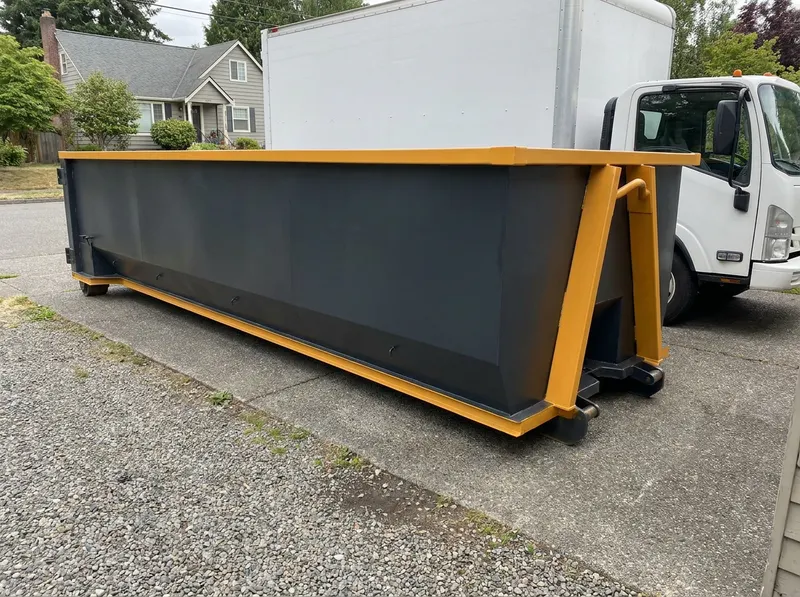
The 30-yard dumpster sits one step below the 40-yard and one step above the 20-yard. A 20-yard holds about 6 pickup loads; the 30-yard holds about 9; the 40-yard holds about 12. The flat Payload Dumpster Rental price ladder reads 10-yard $595, 15-yard $650, 20-yard $695, 30-yard $795, and 40-yard $895 - each number is all-in, so the $795 on a 30-yard already includes the dump fee that many construction and demolition debris haulers tack on separately.
Step 1: measure the drop spot - the 30-yard needs a flat run about 22 feet long and roughly 60 feet of straight clearance for the delivery truck to set it down.
Step 2: confirm the container clears overhead power lines and tree limbs, common on older Wallingford and Greenwood streets. Step 3: if the dumpster sits on a public street rather than a private driveway, a right-of-way permit from the Seattle Department of Transportation is required before placement. Step 4: load heavy debris low and spread it flat so the weight stays legal for road transport.
Step 5: call for pickup, or set a standard rental window and the container is hauled on schedule.
The 30-yard fits a roof tear-off on a Queen Anne craftsman, a whole-home cleanout in Columbia City, or a two-car-garage demolition in West Seattle - jobs where a 20-yard would fill before the work is done and a 40-yard would over-buy space. If the project is a single bathroom remodel or one room of carpet, the 10-yard or 15-yard is the honest fit; the trade-off is driveway footprint versus debris volume, and a half-filled 30-yard still costs the full $795. A dumpster rental is self-service: the container is dropped and the crew or homeowner loads it, which is different from junk removal where a team carries items out for you.
Weight matters on bulk-heavy loads.
Roofing shingles, concrete, dirt, and brick are dense; a 30-yard packed solid with shingles can run near the road-legal axle limit well before it looks full, so spreading the material is what keeps a load compliant and avoids an overweight haul. The OSHA jobsite safety standards also call for keeping loading areas clear, which the rear swing door makes easier by letting a wheelbarrow roll straight in. Prohibited items follow King County rules: no liquids, no paint, no automotive fluids, no tires, no refrigerant appliances, and no household hazardous waste - items that must go to a King County Solid Waste or hazardous waste facility instead.
Clean wood, metal, cardboard, and yard debris can often be diverted; recycling and disposal guidance helps sort what goes where, and the Washington and state Ecology programs set the regional rules for how demolition material is handled.
Every job gets a firm, written price after an on-site visit.
Tell us about your 30-yard dumpster job in Seattle and we'll send a clear, written quote, usually the same day.
 Payload Dumpster Rental